There are places where the forest has not disappeared for good but is simply waiting for a helping hand to return. In Podenii Noi, among the hills surrounded by oak forests, the Tomorrow’s Forest Foundation has completed a reforestation project that has turned 3 hectares of degraded former pastureland into a promise of forest for future generations.
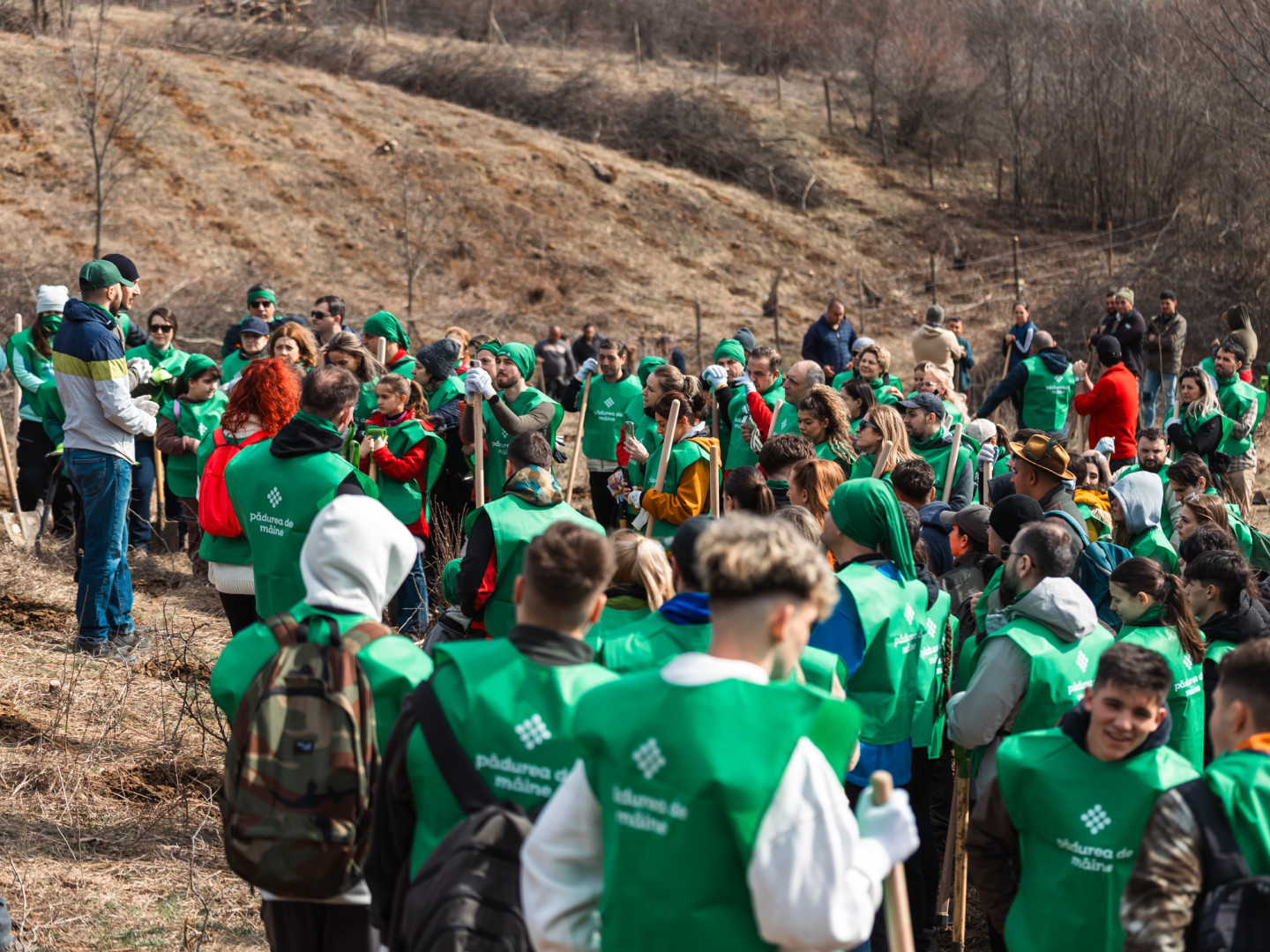
The story began in November 2025 and continued through the spring and autumn of this year. Across the three planting sessions, more than 12,000 seedlings of native tree species were planted. The latest volunteer event, held on 7 November, added another 0.9 hectares of reforested land and approximately 1,600 seedlings.
Restoring nature with the help of the local community
The land covered by the project was once pastureland. After being abandoned, it was gradually taken over by spontaneous vegetation. Bringing the forest back required considerable work before the first seedlings could be planted: clearing the land, preparing the plots and organising the planting activities. The local community provided invaluable support throughout this process.
“Today we are bringing the Podenii Noi project to a close, with the Tomorrow’s Forest Foundation having planted 3 hectares here. I can say that this is the most beautiful place we have ever planted. We are in an area surrounded by oak forests, and we have continued with oak ourselves, bringing the forest back to this degraded land,” said Mihail Caradaică, Executive Director of the Tomorrow’s Forest Foundation.
He also highlighted the importance of involving local residents, who have not simply witnessed the project but have actively contributed to transforming the land.
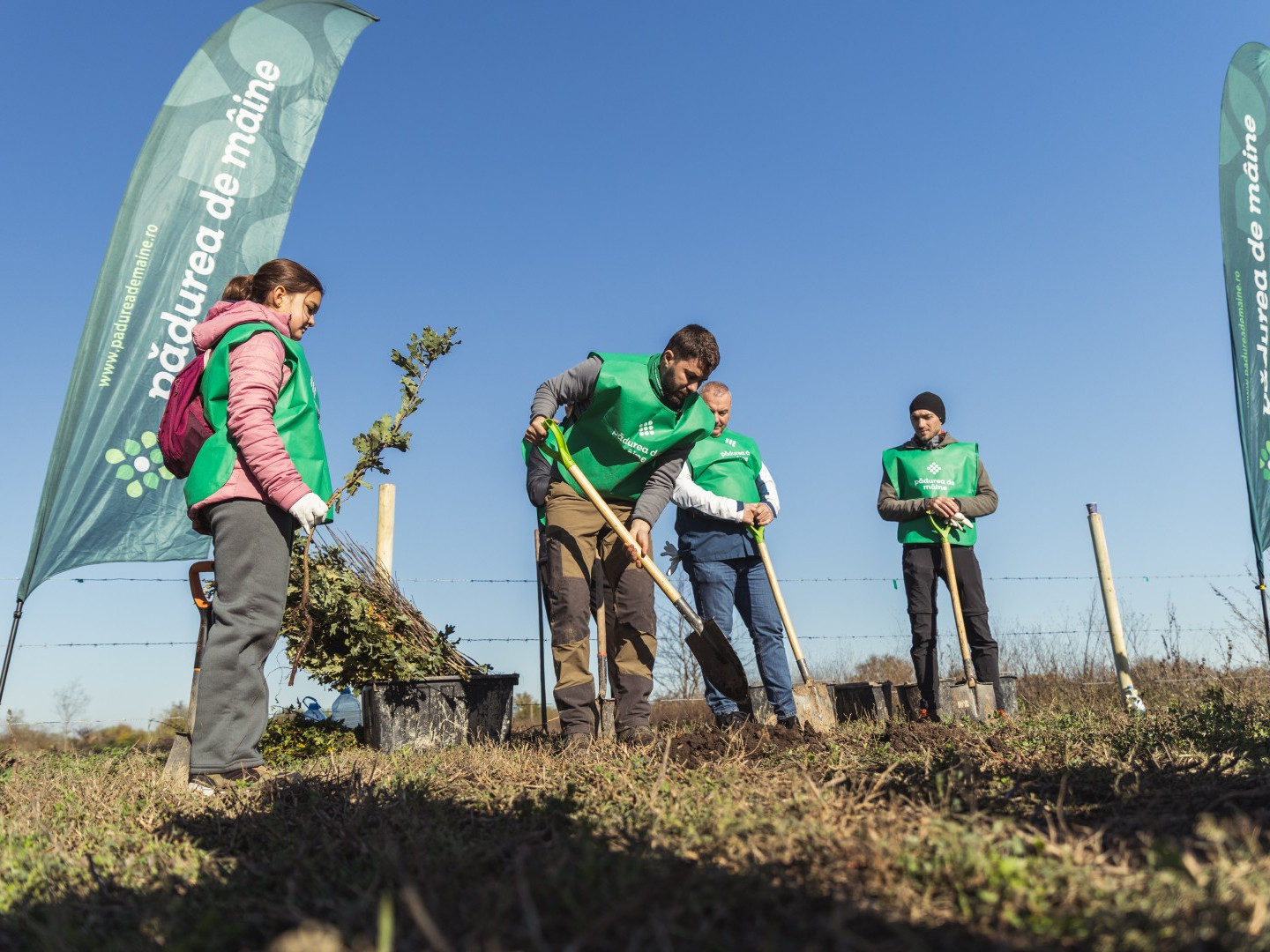
“We are delighted by the large number of volunteers who joined us today and who provide invaluable support for our work. We have carried out these activities together with the local community in Podenii Noi, whose members helped clear the land and prepare it for planting. We are proud to involve both volunteers and the local community, because the people who live here are the ones who will look after this forest.”
A new approach to give young trees better protection
During the final planting stage, the Foundation introduced a new technique designed to improve the seedlings’ chances of survival and healthy growth during their first years.
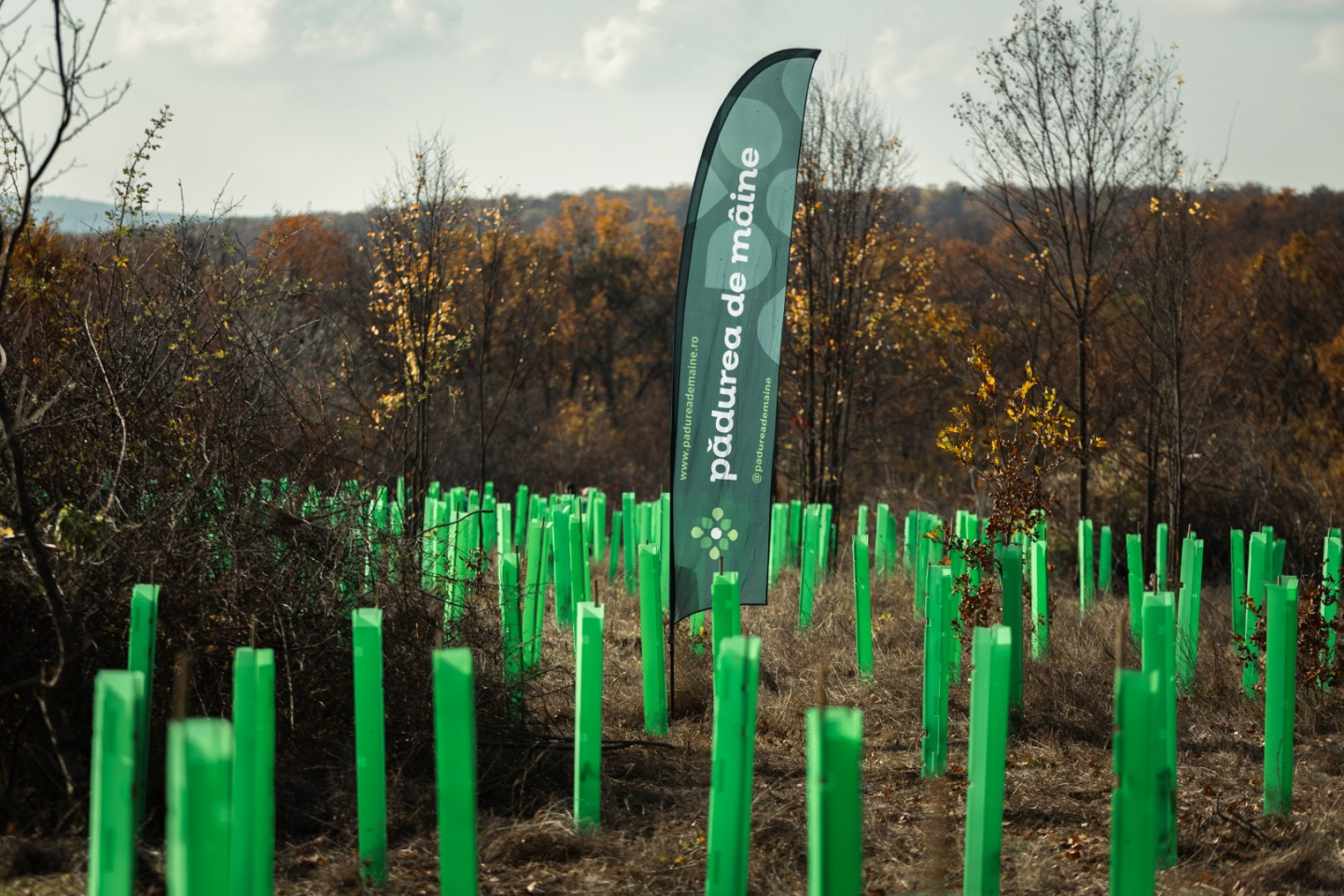
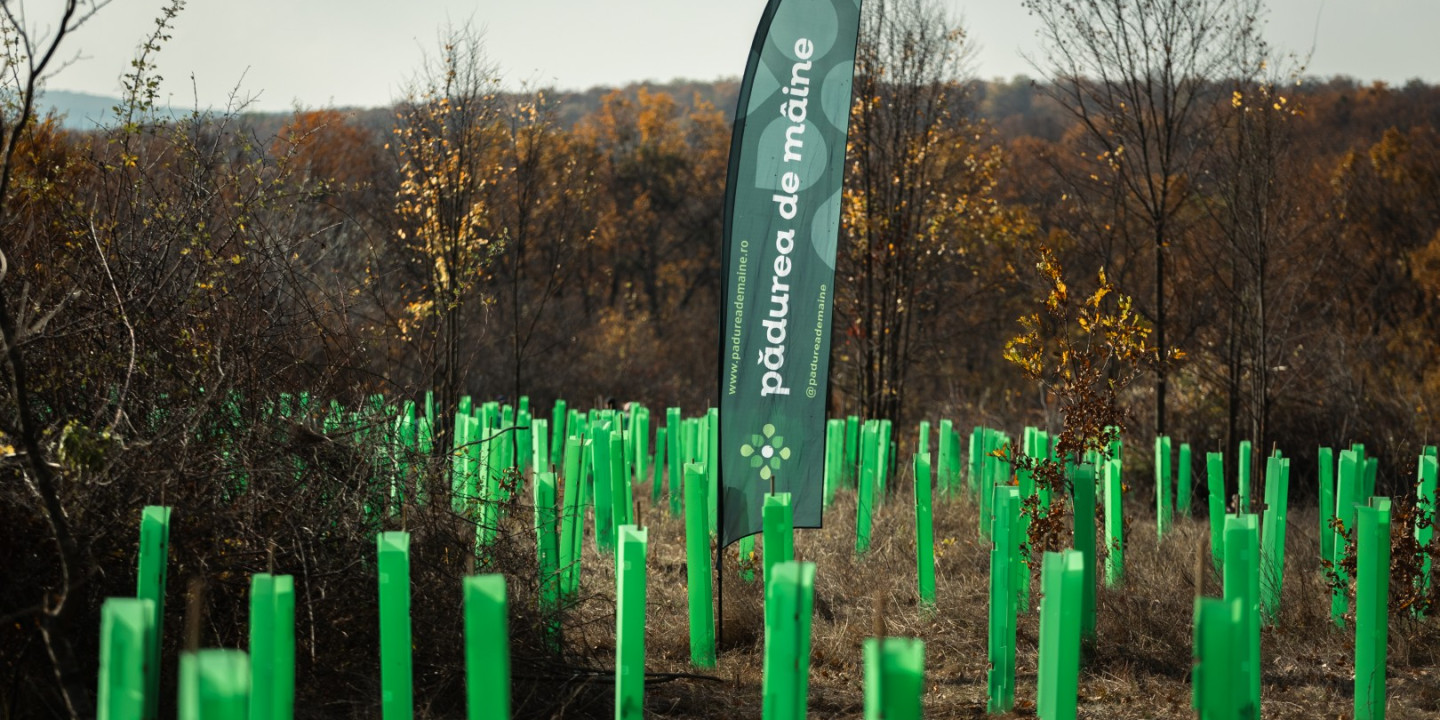
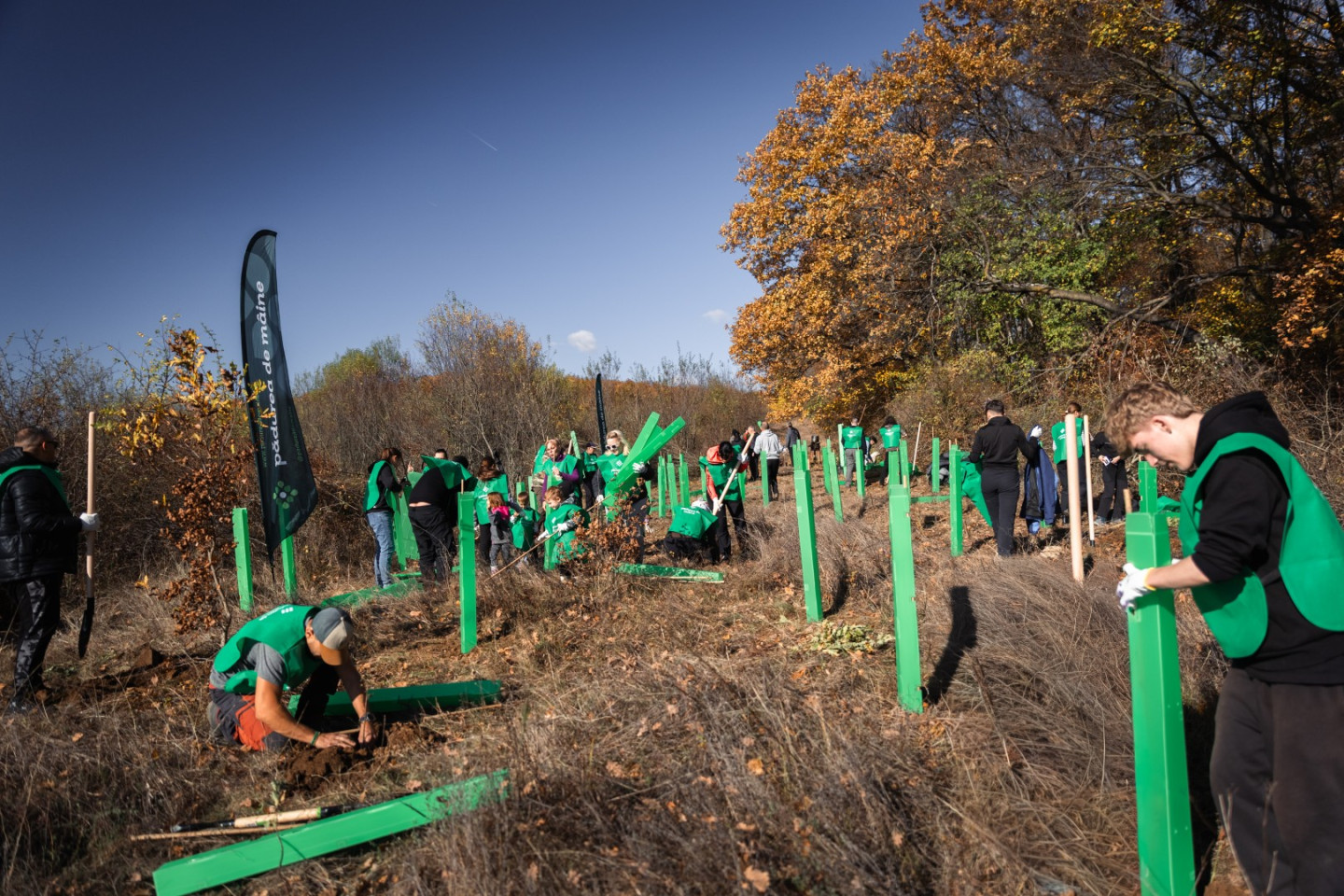
This time, the seedlings were fitted with biodegradable tubular guards supported by bamboo stakes. The system protects them from rodents, deer and wind while creating a microclimate that encourages growth. The guards naturally biodegrade over time as the trees grow and outgrow them.
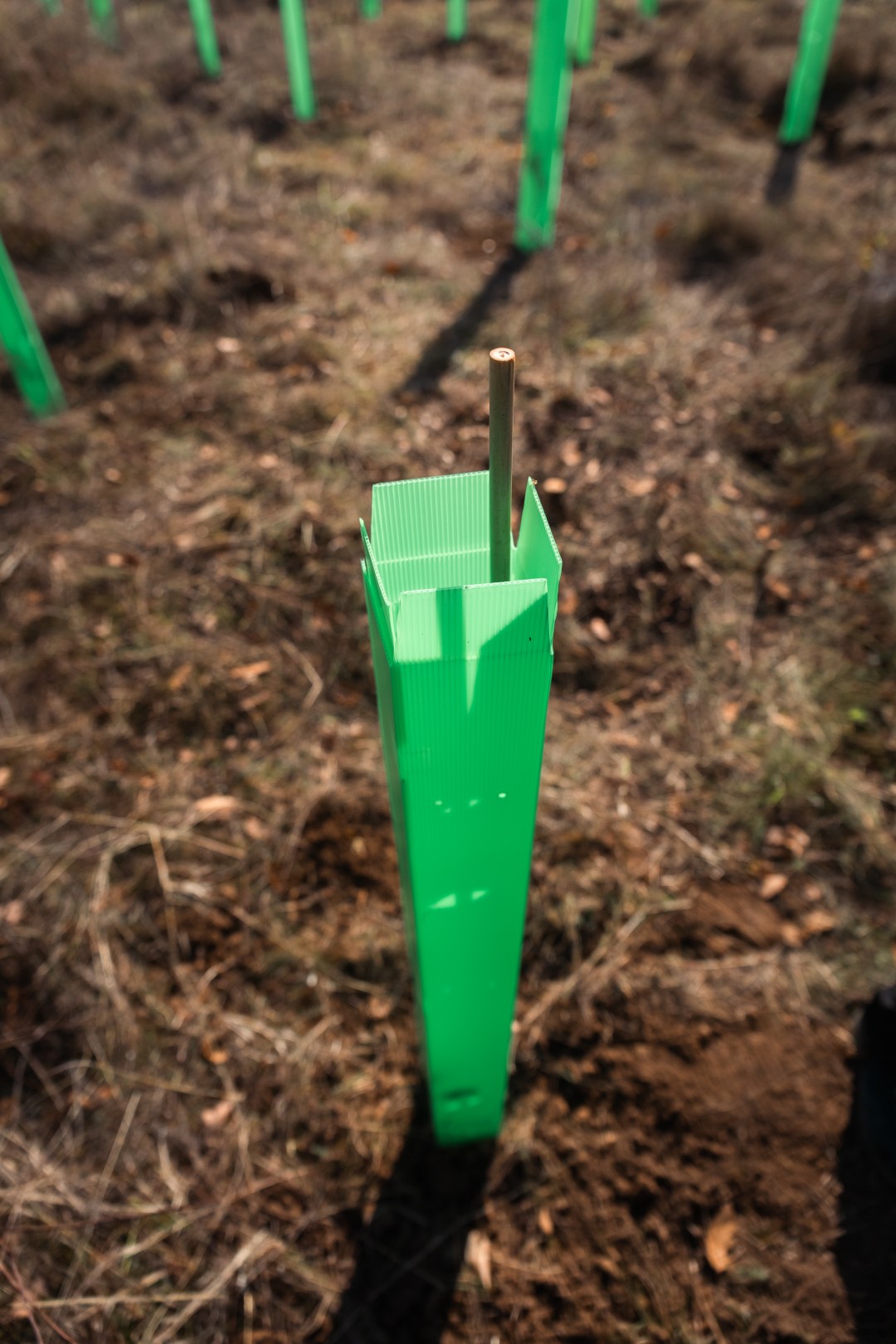
The species selected for this stage were pedunculate oak, accounting for approximately 85-90% of the seedlings, and wild cherry. Both are native species well adapted to local conditions.
“We chose this site because it was degraded, and at the Tomorrow’s Forest Foundation we look for areas like this that can be returned to forest use by planting native species. This year, we selected pedunculate oak and wild cherry and introduced tubular guards, which provide important protection for seedlings during their first years of growth and also make subsequent maintenance work easier,” explained Ștefan Uțu, Reforestation Programme Coordinator at the Tomorrow’s Forest Foundation.
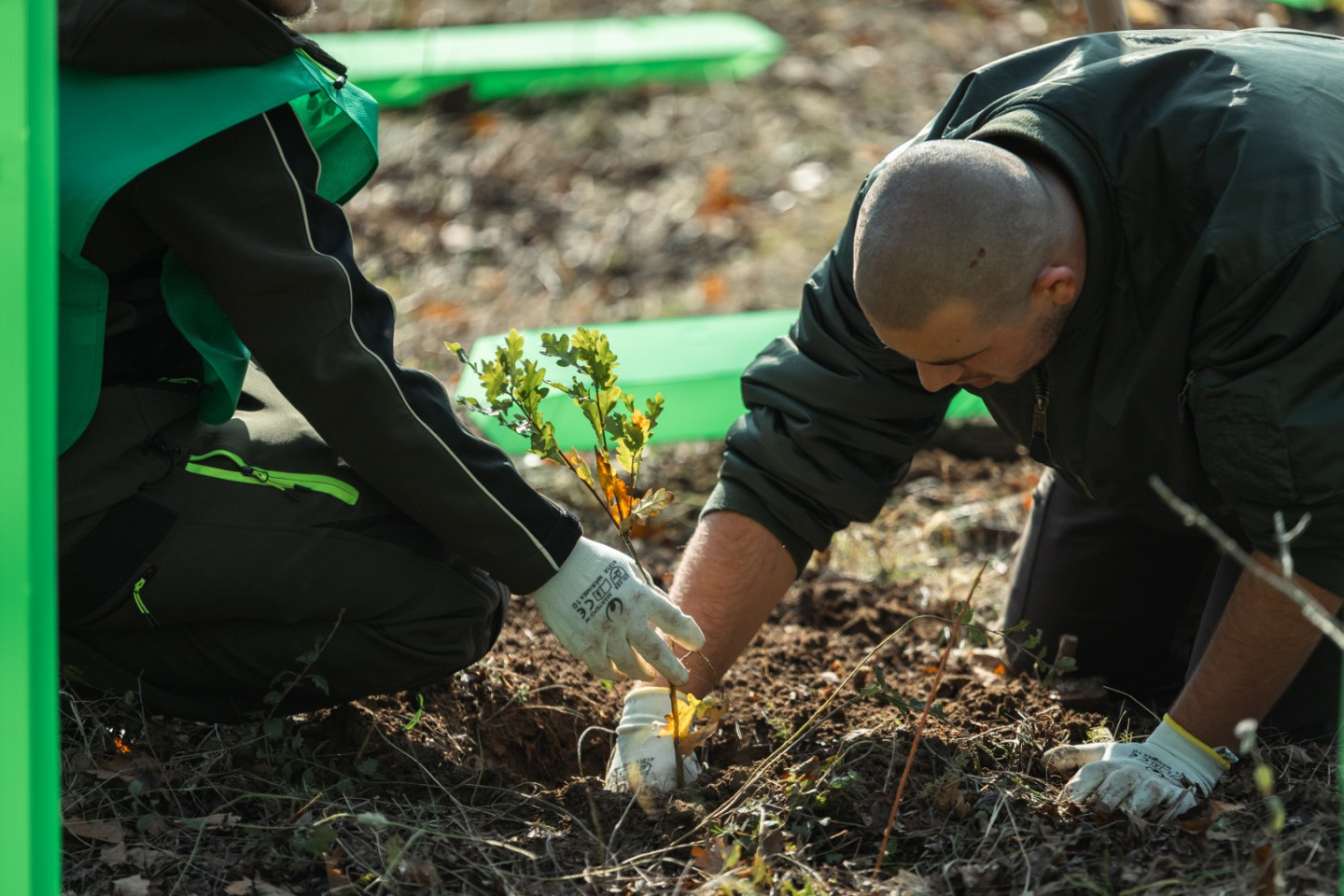
The new technique also calls for greater care during planting. The guards must be fitted correctly, and each seedling must be carefully positioned and secured. For this reason, volunteers received practical instructions before work began.
But planting is only the beginning. The Foundation will monitor the plantation for at least three years. During this period, maintenance work will include clearing competing vegetation, loosening the soil and replacing any seedlings that do not survive.
“We do not simply plant and leave. We monitor the plantations we establish for at least three years. We will also need volunteers in the coming period to help with clearing competing vegetation, soil loosening and any necessary replanting. We want this forest to grow as quickly and as well as possible,” added Ștefan Uțu.
Future foresters learn in the field
Among those taking part in the 7 November event were nearly 20 students from the “Dr. Nicolae Rucăreanu” Forestry Technological High School in Brașov, accompanied by their teachers.
For these young people, joining the Foundation’s planting activities is more than a volunteering opportunity. It is an important part of their professional training and a direct introduction to the work they may pursue in the future.
Aurelia Mogan, a teacher at the Brașov high school, says students look forward to these activities, particularly those in ninth grade, for whom they offer an early glimpse into the day-to-day reality of forestry work.
“The students enjoy this activity and are always eager to take part. Every year, we have tried to introduce our ninth-graders to the life of a forester, and they can hardly wait to join these events. Today’s experience is special and forms part of their everyday training. Through practical work, students realise how the things they learn in theory can be put into practice and gain a much better understanding of what working in the field involves.”
The students have their own reasons for returning to planting events. For 16-year-old Mihnea Stoian, it was “a very beautiful experience” and an opportunity to help protect nature. Adina Stoica, aged 17, feels she learns much more effectively through hands-on practice than from classroom lessons alone.
Perhaps the most memorable perspective came from 17-year-old Ioana Babin, who chose a single word to describe the day: “future”. For her, the joy lies in knowing that, a few years from now, she will be able to return and see how the trees planted today have grown.
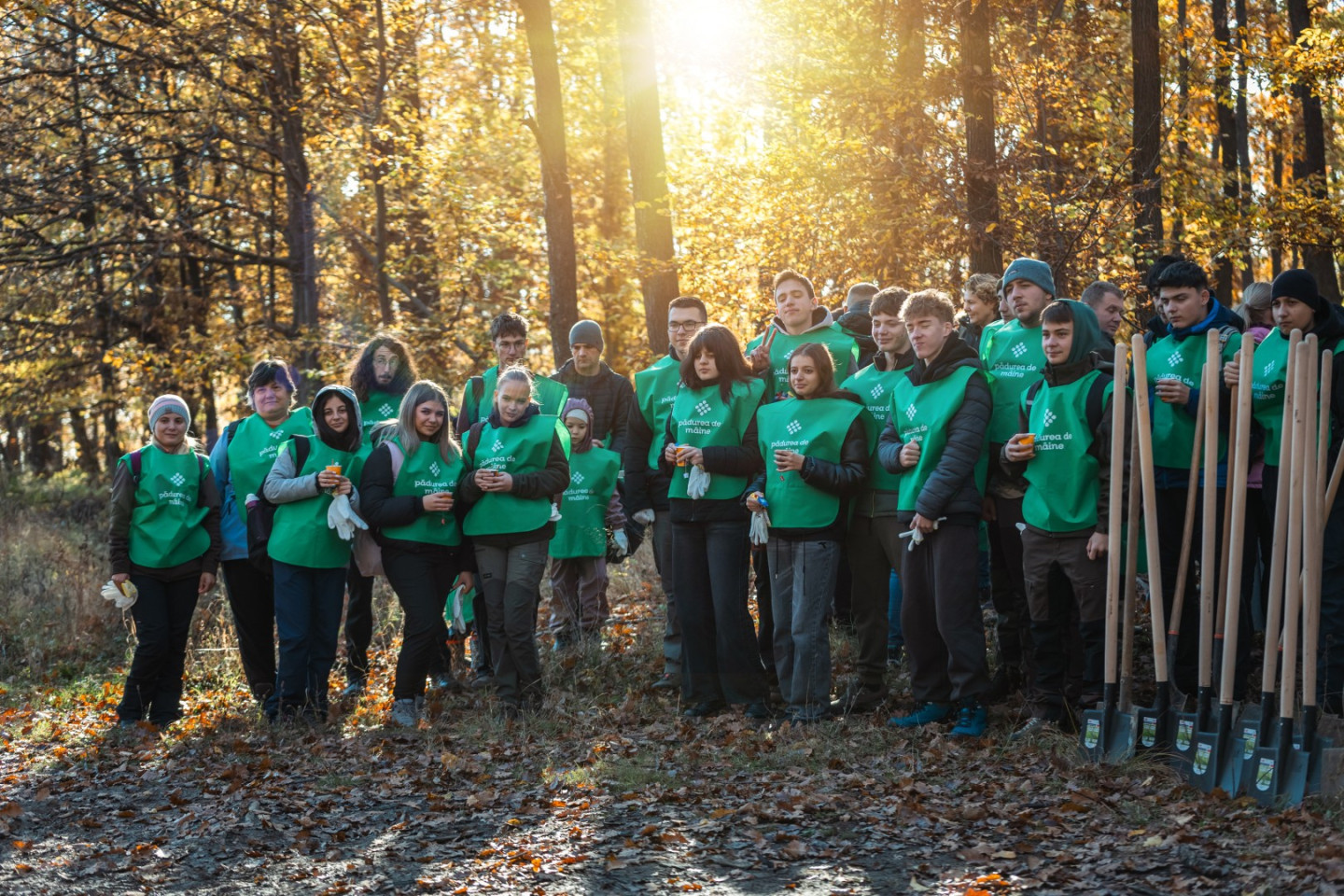
Plant today, care for the forest tomorrow
The Podenii Noi project shows that restoring a forest involves much more than putting seedlings in the ground. It means preparing the land, selecting the right species, using techniques that support their growth, monitoring the plantation over the long term and, above all, involving the people who live near these areas.
For the Tomorrow’s Forest Foundation, the more than 12,000 seedlings planted across the 3 hectares are a beginning. A forest takes time to grow, and the people who helped bring it back will have the opportunity to follow its progress in the years ahead.
The weekend of 7-8 November was devoted entirely to this effort. After completing the Podenii Noi project, the Foundation’s team and volunteers continued their reforestation activities on Sunday, 8 November, in Vasilați, Călărași County.
Because a forest cannot be built in a single day, but every day when people join forces for the same purpose makes a difference.