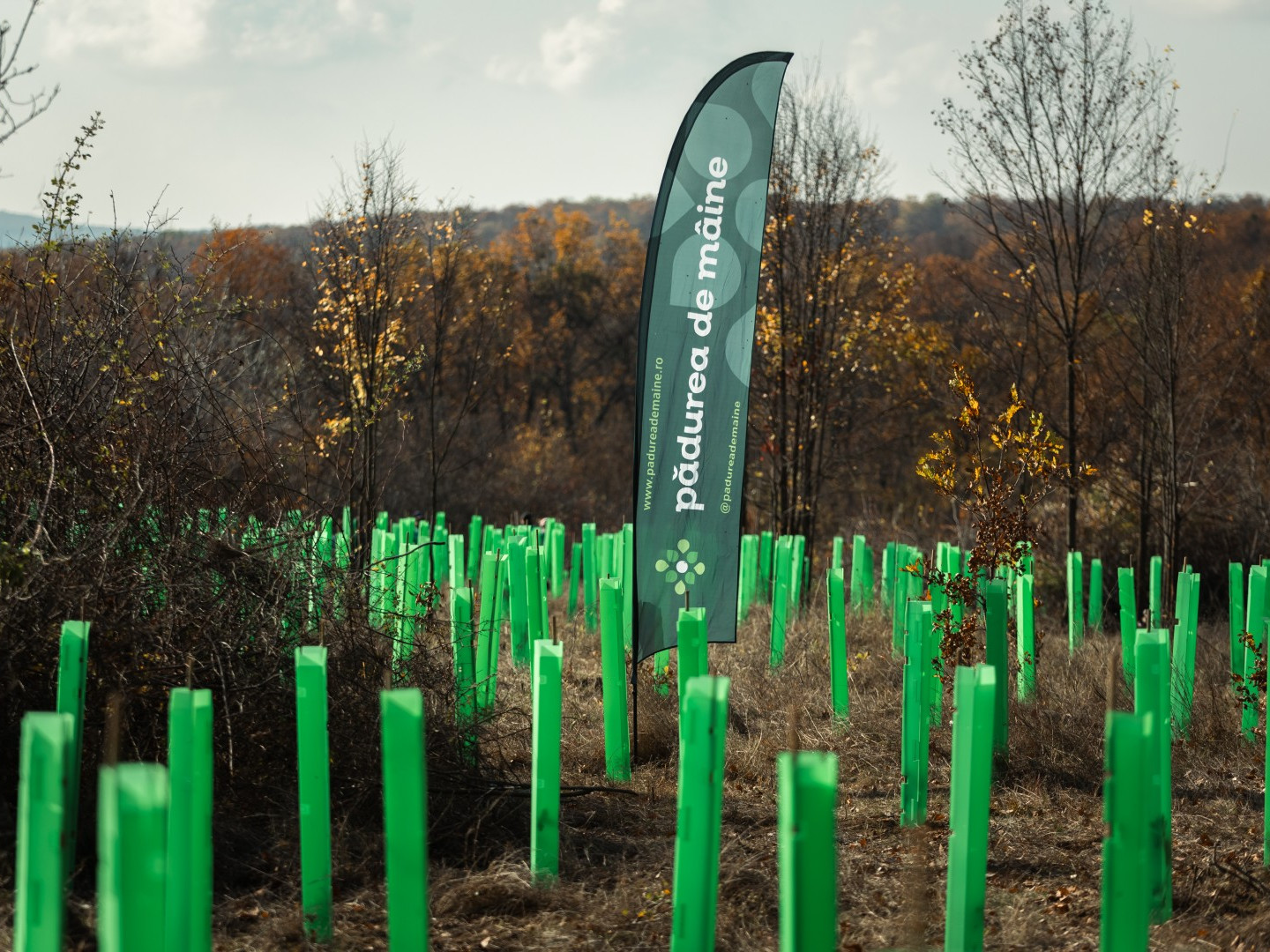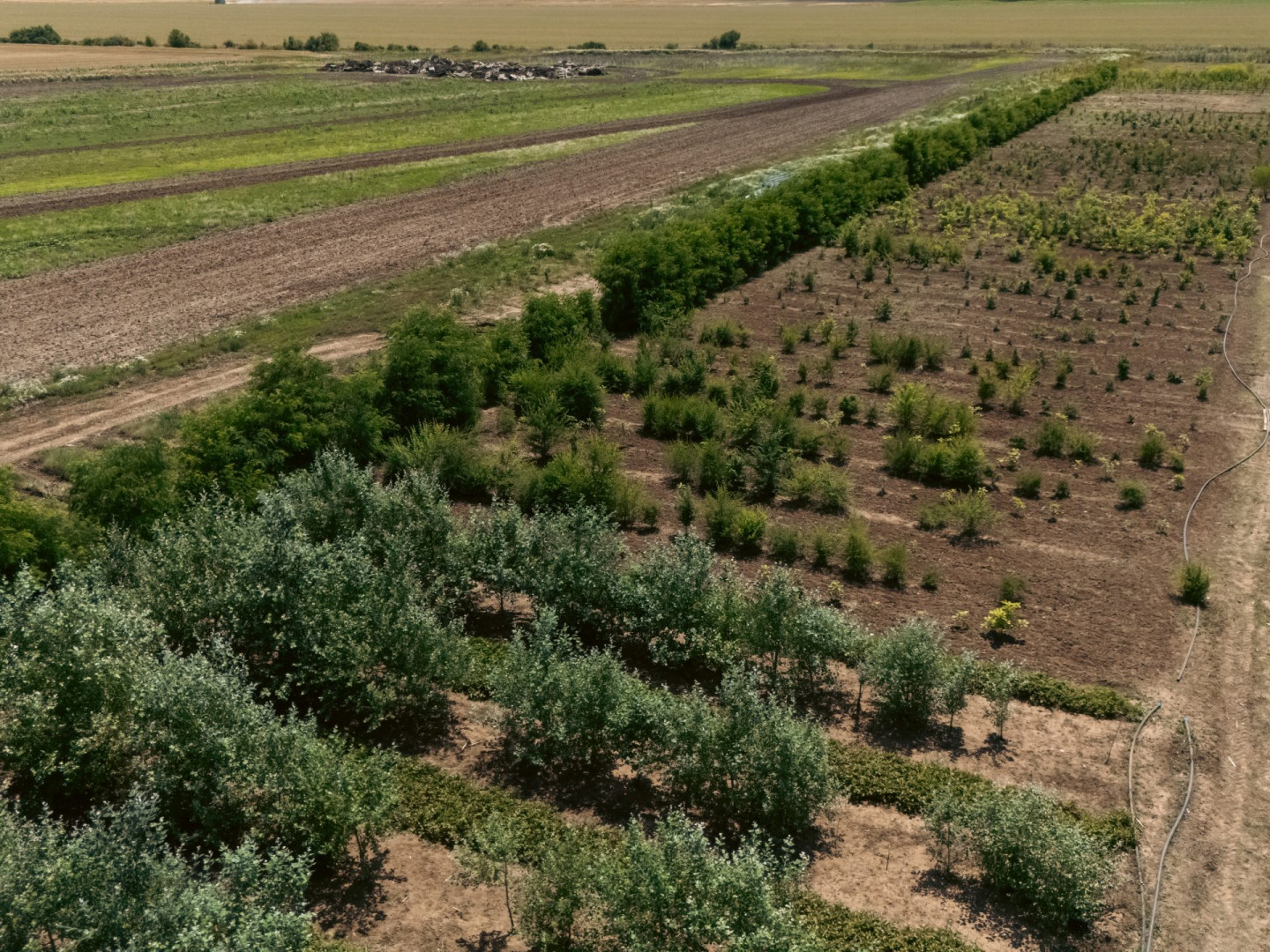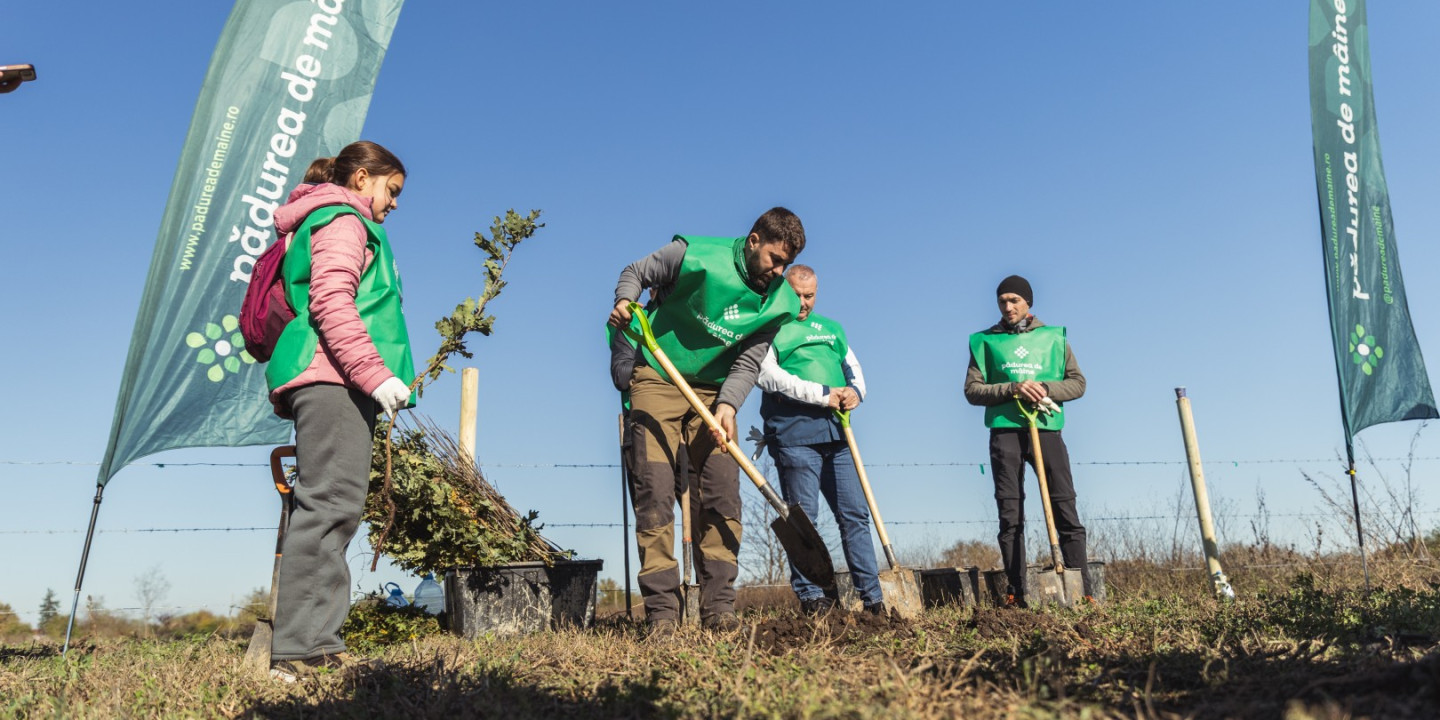
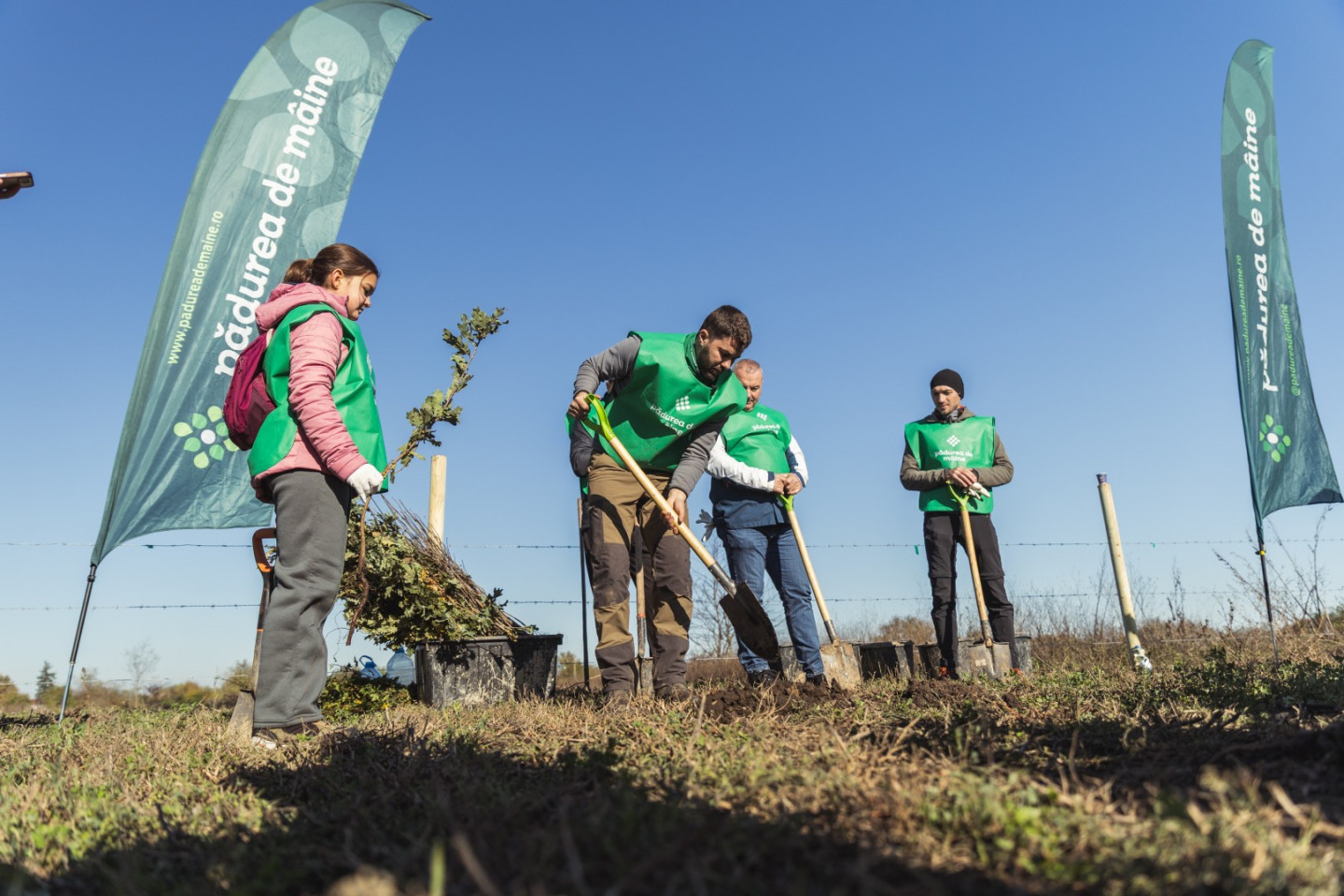
On the border between the communes of Vasilați and Sohatu, in Călărași County, a piece of land that until recently was affected by illegal waste dumping is beginning to take on a new look. Following an earlier clean-up operation, the 1.4-hectare site has now been planted with greyish oak and field maple seedlings, species suited to the climatic conditions of southern Romania.
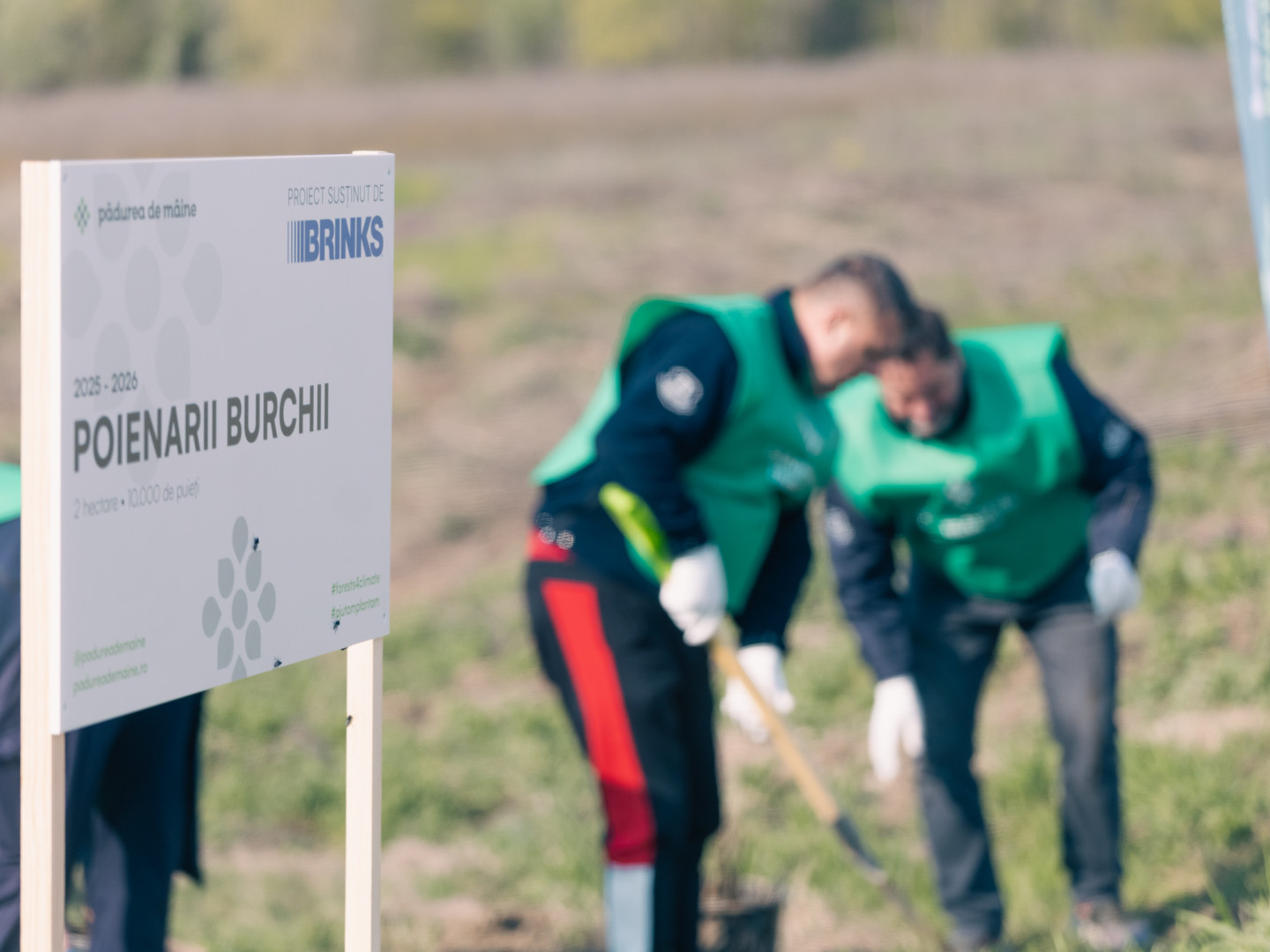
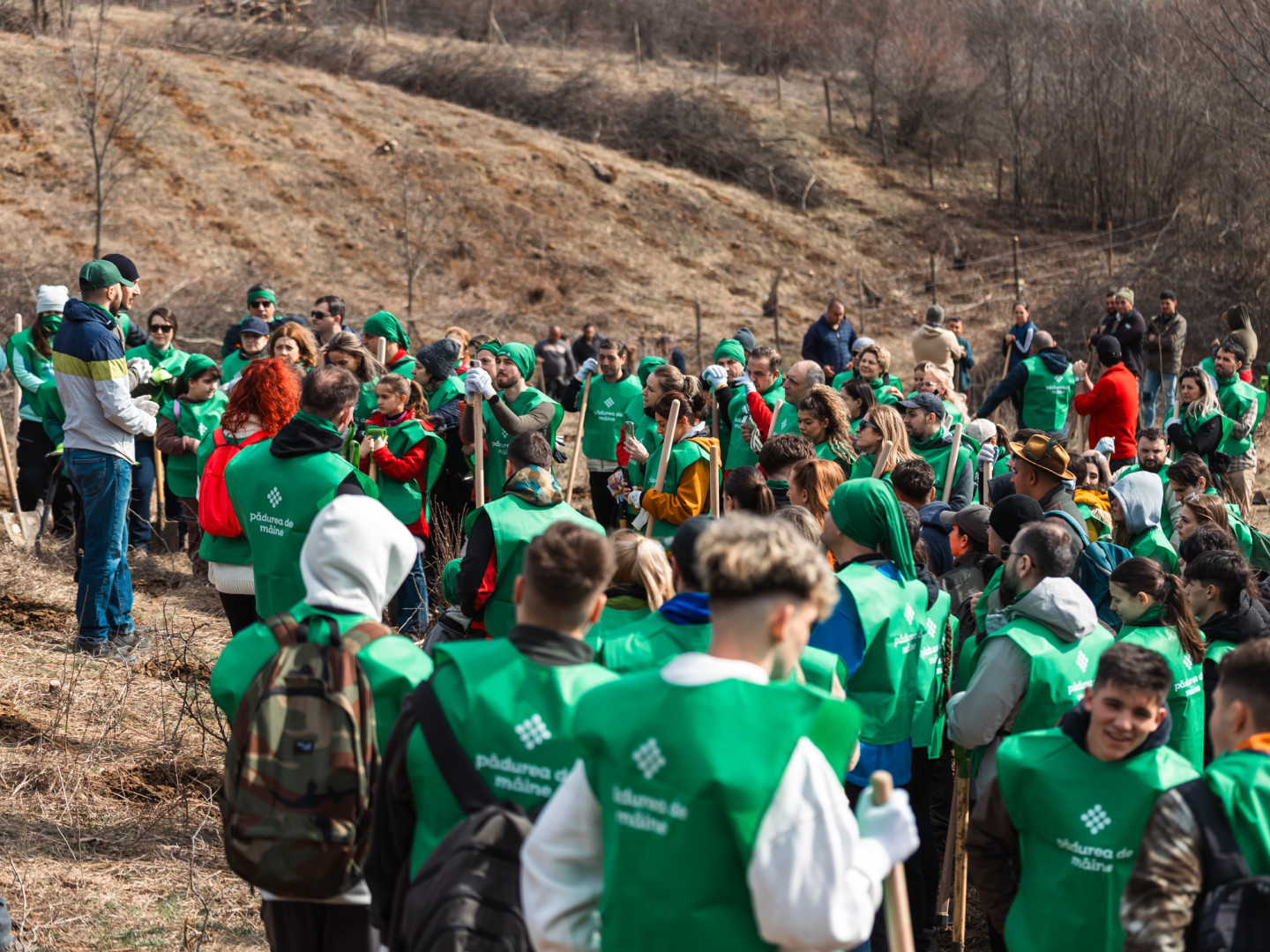
On Sunday, 8 November, we returned to Vasilați for the next stage of the project: planting the new forest. Joining the Tomorrow’s Forest Foundation team were students from the “Theodor Pietraru” Forestry College in Brănești, representatives of the local authorities and community volunteers. Different people, united by the same goal: helping transform degraded land into a space that future generations can enjoy.
A forest starts with choosing the right species
Not all forests are planted in the same way. Soil and climate conditions, rainfall patterns and the temperatures specific to each region all matter when choosing the species that will make up a new forest.
In Vasilați, where summers are hot and dry, the choice was greyish oak and field maple, two species adapted to the conditions of the southern plains.
“We chose greyish oak and field maple because they are resistant to drought and the high temperatures typical of this region. At Podenii Noi, we planted pedunculate oak, which is better suited to hilly areas, whereas here we opted for species adapted to the southern plains,” explains Ștefan Uțu, Reforestation Programme Coordinator at the Tomorrow’s Forest Foundation.
Our experience with previous projects gives us confidence in these choices. At the first regeneration assessment, the survival rate recorded in other Foundation plantations exceeded 85%. We hope to achieve similarly good results in Vasilați!
More than planting trees: giving land back to the community
Romania has millions of hectares of abandoned or degraded land, many of which have gradually turned into illegal dumping sites. Restoring these areas takes effort, cooperation and, above all, a long-term vision.
In Vasilați, the clean-up operation took place before the planting, with support from the local authorities in Vasilați and Sohatu. Removing the waste and preparing the site made it possible to turn the area into new woodland.
“At the Tomorrow’s Forest Foundation, we set out to identify sites like these and find ways to restore them to nature. Together with the local community, we cleaned up this area and started planting a forest where there used to be rubbish. It is important to see initiatives like this happening everywhere, especially in the lowland regions,” says Mihail Caradaică, Executive Director of the Tomorrow’s Forest Foundation.
For Cristian Vasile, Mayor of Vasilați, the project also has a personal significance. With this planting, the total area reforested in the commune over the past six years reaches 12.5 hectares.
“Previous generations left us forests, and we must make sure we can leave something just as valuable to future generations. Here, we have turned a dumping ground into a green lung, which I am handing over to the community of Sohatu,” he said.
Cătălin Iordache, Mayor of Sohatu, also had a message for local residents: the new plantation must be protected, and the site must not become a dumping ground again. The forest needs time to grow, but it also needs the care of the people living nearby.
When the community gets involved, the forest takes root
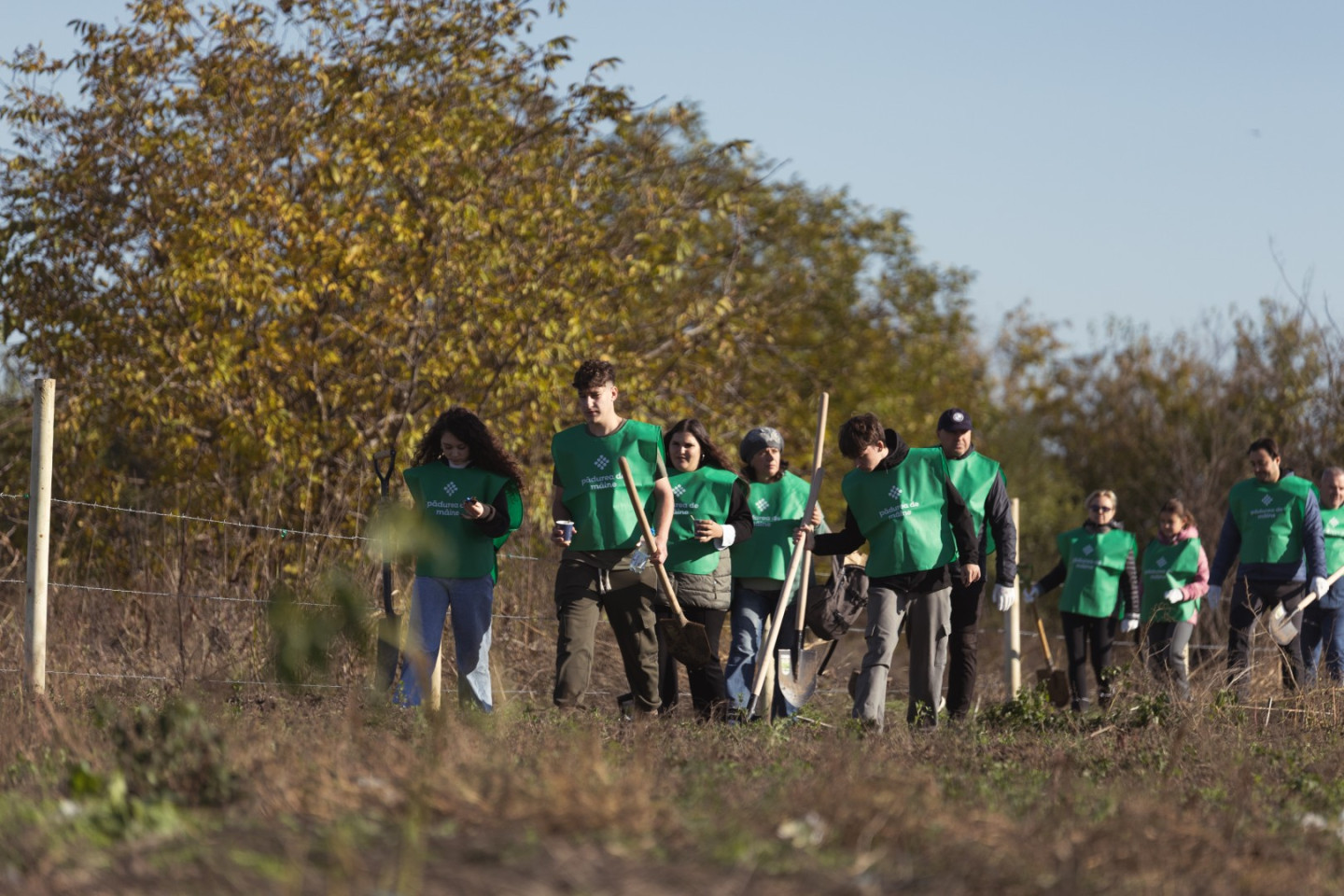
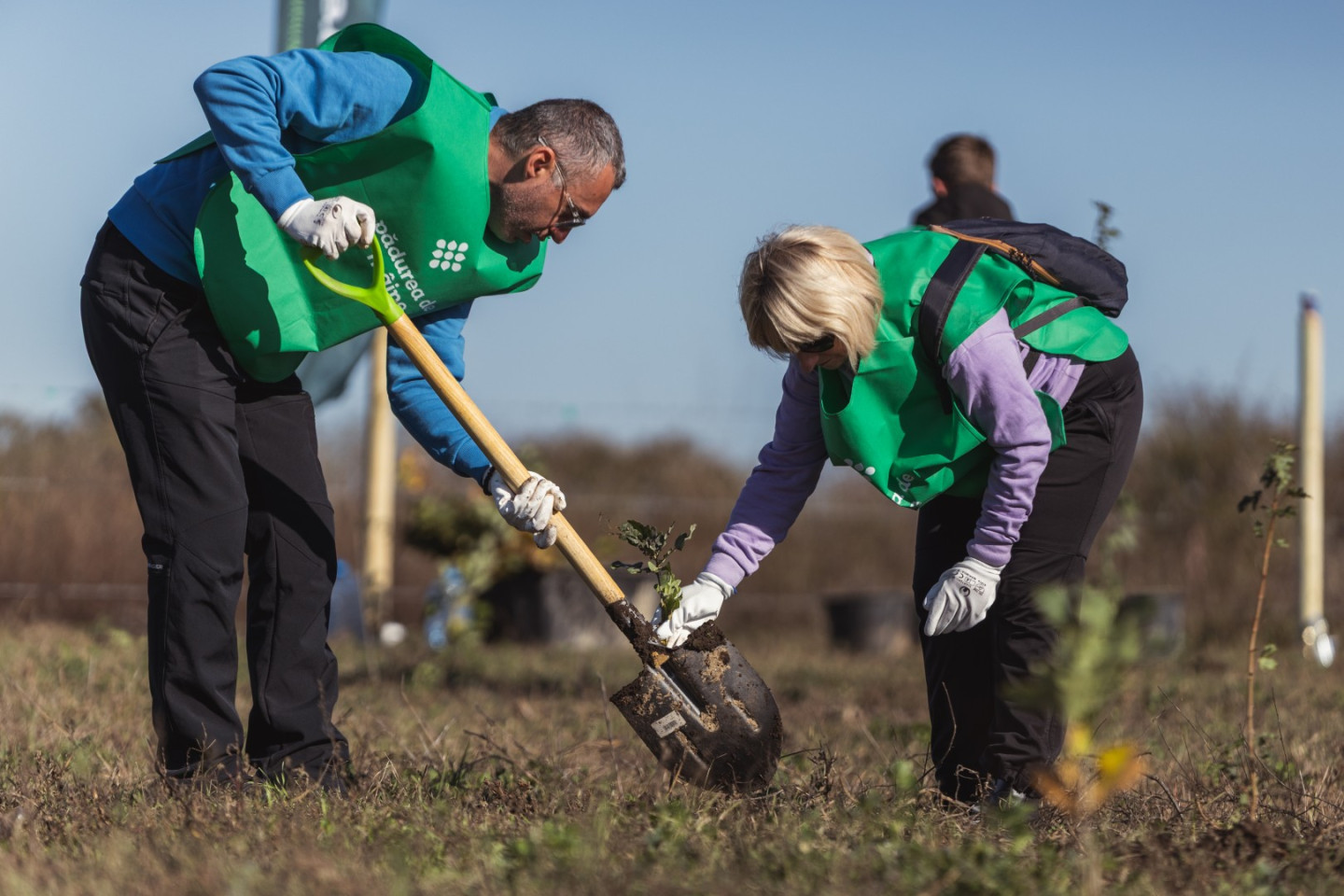
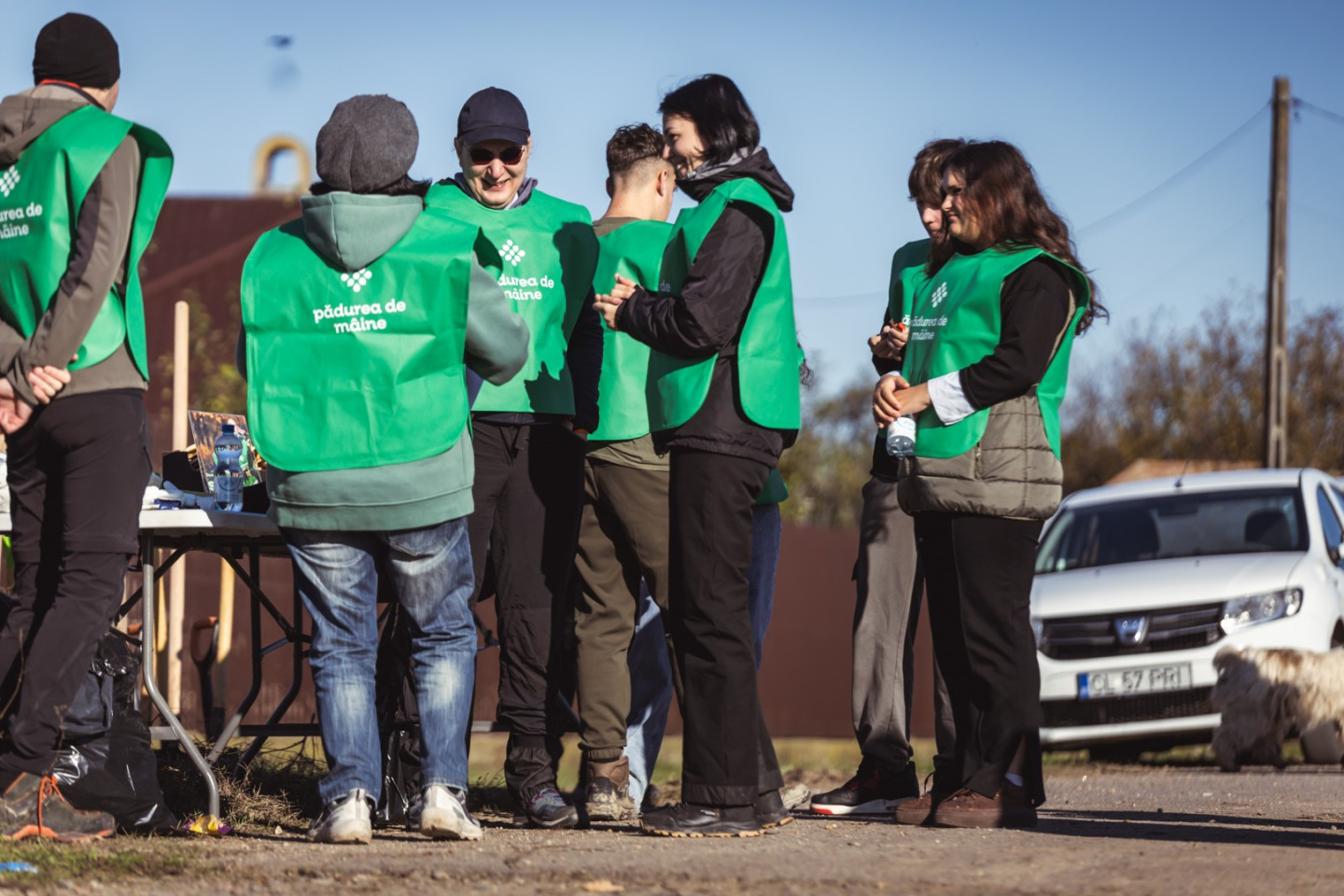
One of the best things about tree-planting events is that they bring together people who might not otherwise have met. In Vasilați, students from the “Theodor Pietraru” Forestry College in Brănești joined local authority representatives and volunteers who had heard about the initiative and wanted to contribute.
Among the volunteers were Valentina Tache and her 17-year-old daughter, Daria. Their family owns a house near the site, and the prospect of a forest in the area gave them an extra reason to get involved.
“I thought it was a wonderful idea to plant a forest in this area. I don’t think there are many forests around here, and we wanted to lend a hand and have some fresh air close to my parents’ house. The atmosphere was lovely, with everyone working together. We will definitely keep in touch and come back,” Valentina and Daria said.
For the local authorities in Sohatu, residents’ involvement will remain just as important after the planting is over. The seedlings need protection, and responsibility for the future of the forest is a shared one.
Forests take years of care to grow
A 1.4-hectare site may seem modest compared with the millions of hectares of degraded land in Romania. But restoring each site is a step forward, especially when the project goes beyond planting seedlings and focuses on helping a forest grow and protecting it in the long term.
In Vasilați, change did not happen overnight. First came the clean-up, followed by the planting. Now comes the part that does not show up in photographs from a volunteering event: the years in which the seedlings must grow, adapt and be protected.
It is a long-term commitment, and that is precisely what makes reforestation projects meaningful. The Tomorrow’s Forest Foundation has planted almost 1.3 million seedlings across Romania so far, and every new plantation carries a promise that extends well beyond planting day. In Vasilați, that promise covers 1.4 hectares and will grow alongside the oaks and field maples planted by people who chose to get involved.
A forest cannot be created in a single day, nor does it belong only to those who planted the first seedlings. It grows over time and becomes a shared asset, one that future generations will be able to inherit.